From Chapter 25 — Conversion economics
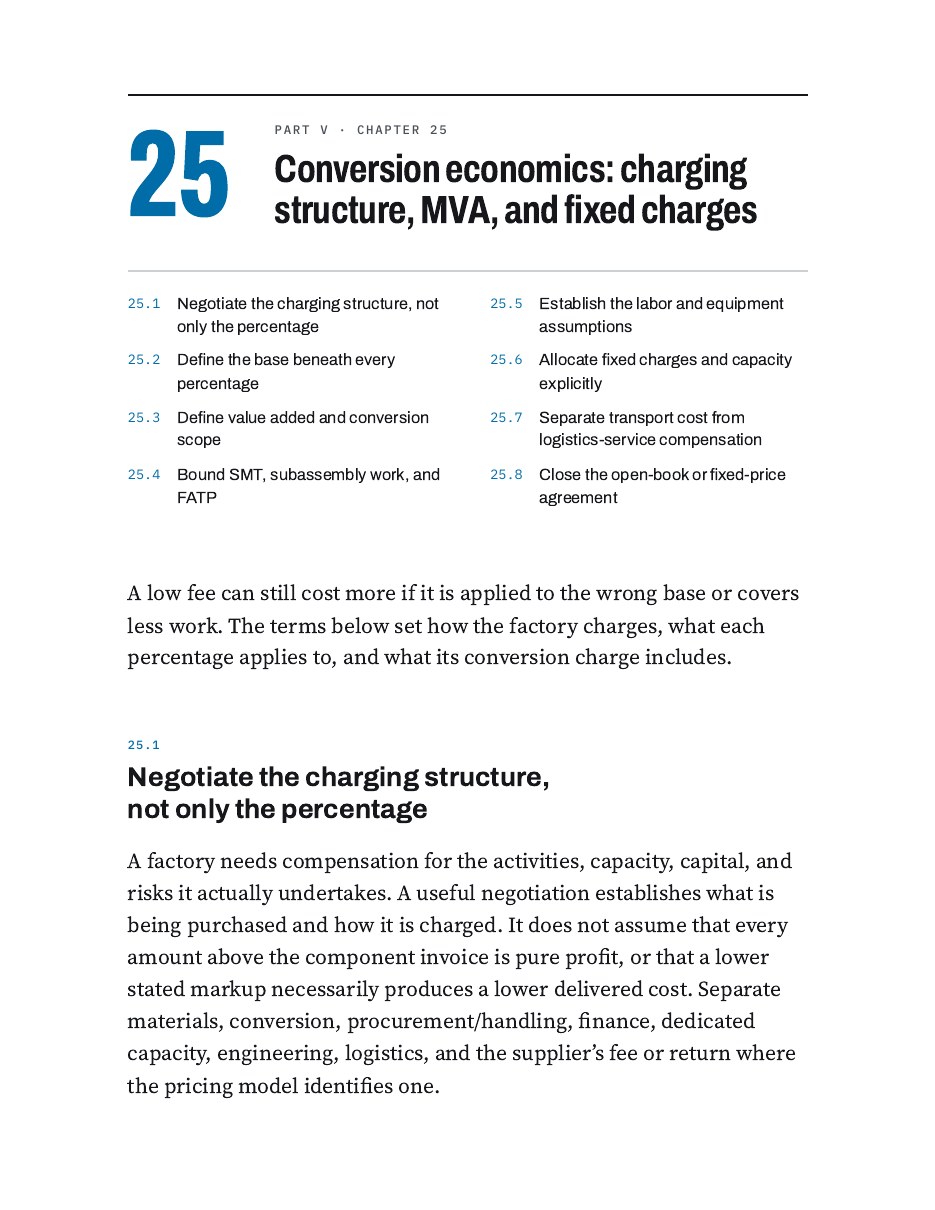
Many factories quote in two parts: the bill of materials (the parts, chips, plastics, and other components) and manufacturing value add, usually shown as MVA. MVA is what the factory charges to turn those materials into a finished product: direct labor, factory overhead (utilities, facilities, equipment maintenance, and depreciation), process steps such as SMT, PCBA test, and FATP, and the factory’s margin.
Keeping the two apart shows what you pay for parts, whose prices move with the market, separately from what you pay for the factory’s work. It also puts the factory’s efficiency on the table. If MVA is high, you can push on cycle time, line balance, or manual labor instead of arguing over the total.
I required every factory to list each of the MVA items separately in our quote format (Chapter 29). Some factories wanted to give us a single MVA line instead, which hid their real costs and their profit in one number. A single line can’t be compared across factories or negotiated item by item.
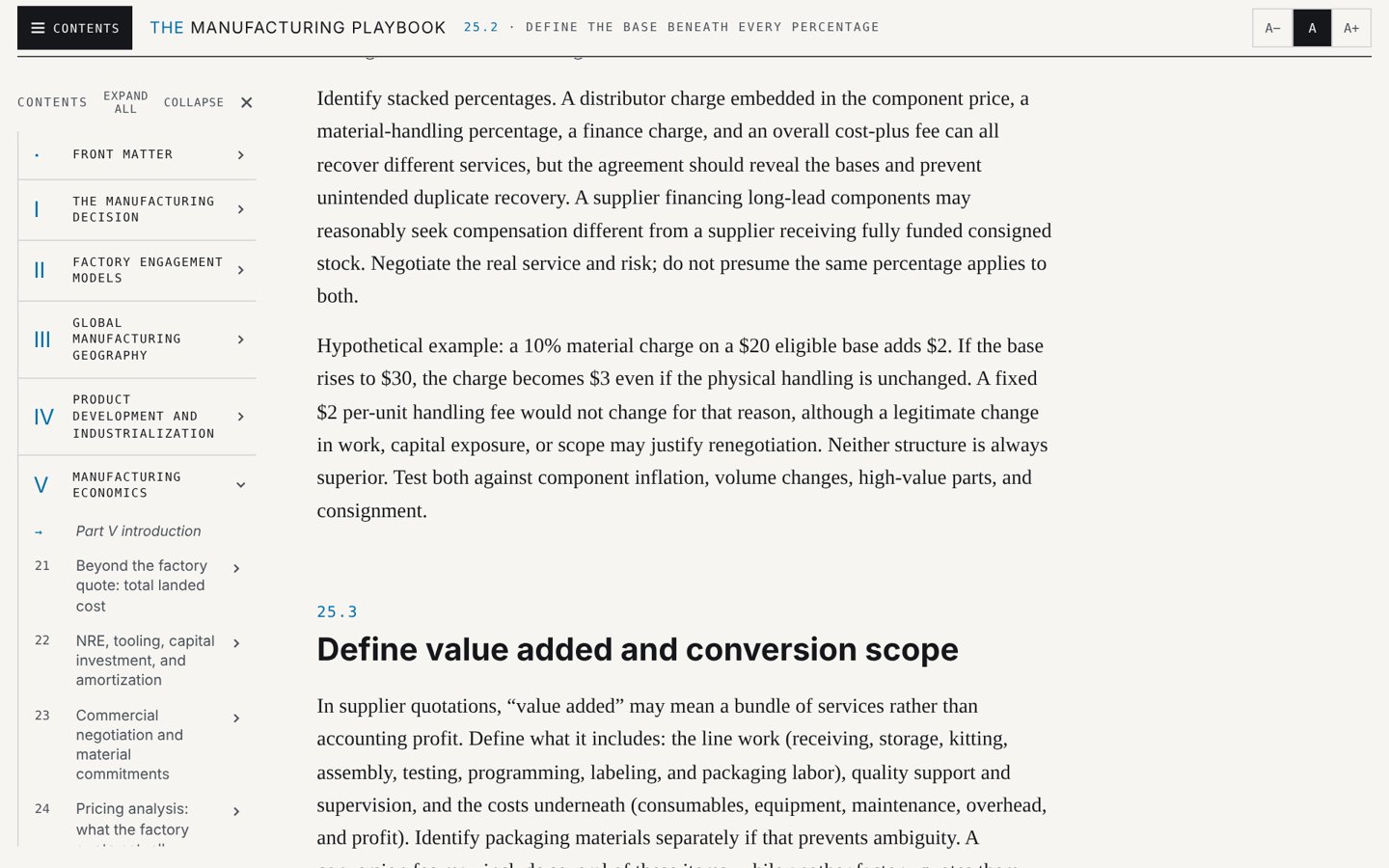
Do not equate the value-added charge with net income. It may fund wages, support staff, facilities, equipment, losses, and other operating costs. Likewise, identify whether an explicit profit/fee is already inside the conversion rate or added after cost.